

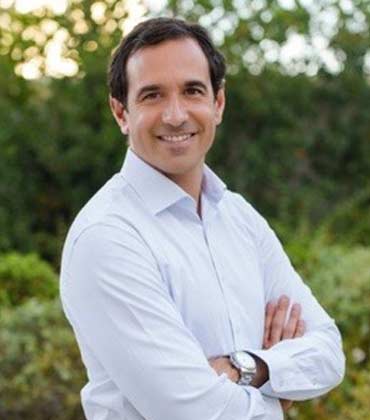
 Juan Cristóbal Wagner, Admissions Director
At Enovus University we work with adult professionals across the U.S and Latin America, mainly in Peru and Panama, with a growing presence in Chile, Colombia, Costa Rica and Argentina. Here are three developments from that vantage point that I believe will shape the next few years of online higher education.
Flexibility is the product
The most important change is structural. For a 35-year-old logistics supervisor in Lima or a mother of two working full time in Panama City, a fixed class schedule is not an inconvenience. It is a barrier. Fully asynchronous, 100% online programs remove that barrier. Students move through content at the hours their lives allow and that makes a degree realistic for people who were effectively shut out before.
Flexibility without structure, though, becomes isolation. The programs that succeed pair asynchronous delivery with real human support, dedicated tutors, personalized academic follow-up and clear milestones. Stackable credentials help too. When a two-year associate degree sits inside a four-year bachelor's, students get a meaningful credential along the way instead of an all-or-nothing bet.
Language and access are equity issues
For decades, Latin American professionals who wanted a U.S. degree faced two hurdles: cost and English fluency. Both filtered out capable people for reasons that had nothing to do with their ability to learn. Delivering U.S. programs fully in Spanish, backed by meaningful scholarships, changes who gets access to international education.
This isn't a niche concern. Much of Latin America still has large gaps between demand for professional skills and the supply of accessible, quality programs. Our own market research in Peru found fields such as logistics with almost no consolidated online undergraduate offering. The opportunity for online institutions is not to copy traditional campuses. It is to serve the learners and disciplines that traditional campuses have missed.
-
The next step is proving that access and quality can grow together.
Trust is the new currency
The hardest challenge in our sector isn't technology. It's trust. Prospective students rightly ask whether an online degree from a foreign institution will be recognized, whether it will help their career and whether the institution will still be there when they graduate. Across the region, regulators are tightening oversight and licensing decisions now make headlines. That is healthy for the industry.
My view is simple, institutions should welcome this scrutiny and lead with transparency. That means being precise about regulatory status, clear about how degrees can be validated in each country and honest about outcomes. At Enovus University we have learned that the questions students ask in admissions conversations are not objections to overcome. They are signals of what the whole sector needs to prove.
What comes next
Looking ahead, I see three opportunities:
• Curricula that keep up with work. Data, artificial intelligence, digital marketing and supply-chain management are no longer electives. They are core literacy for today's professionals and should be built into business and engineering programs from day one.
• Partnerships as distribution. Alliances with employers, technical institutes and professional associations will matter more than advertising. The best enrollment channel is an employer who sees graduates perform.
• Outcomes as the headline metric. Employability, promotions and salary progression will increasingly set institutions apart. Programs that can show career impact will earn the trust that marketing alone cannot buy.
Online universities have shown that geography no longer has to limit ambition. The next step is proving that access and quality can grow together. In Latin America and for Latinos living in the United States, where talent is abundant but flexible, high-quality education is still scarce, that proof is already being built one graduate at a time.
For those looking to advance their education, online master's programs in Spanish can provide a flexible learning option.